

Written by Rachel Gold.
Rachel is the Program Leader for Keshet Avodah at Camp Chi summer. She recently graduated from the University of Wisconsin-Madison School of Human Ecology.
Ten summers ago, I got off the bus for my first summer at Camp Chi. This was the summer when I met my “best camp friend,” who is still one of my best friends to this day. It was the summer when I learned how to be apart from my parents and communicate solely via letters. It was the summer when I learned about Camp Chi Magic - the magic that brought me back summer after summer, as a camper, counselor, and now, a supervisor.
I grew up in a north suburb of Chicago where inclusion was the norm. Since kindergarten, I have gone to school alongside peers who have diverse abilities and have been actively involved in my district’s incredible special education programs. When I left the north suburbs for Camp Chi ten years ago, I fell in love with a place and organization that valued inclusion just as much as I do. Camp Chi introduced me to Keshet.
At Camp Chi, campers with disabilities are included in cabins with their typically developing peers. Chi’s partnership with Keshet makes this possible. Campers with disabilities gain independence and develop new social skills while learning from their peers. Typically developing campers are introduced to inclusion at a young age, and become advocates for inclusion of all ability levels. This partnership is mutually beneficial, and from personal experience, I can attest to its ability to create lifelong relationships.
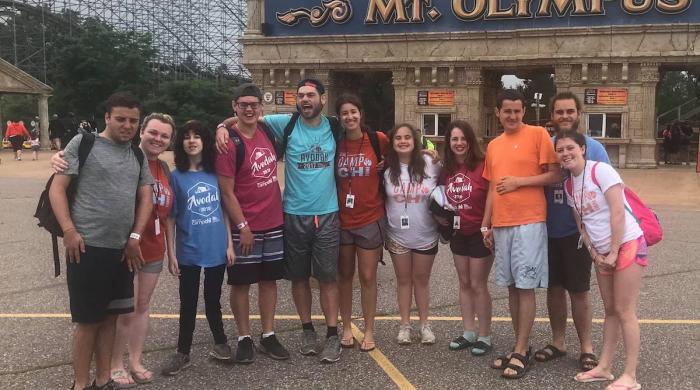
Inclusive programming does not stop when campers age out of camp. When an individual is 16 or 17, and his or her peers become staff members at Chi, young adults with disabilities enter the Avodah program, which offers a vocation-based twist on typical camp recreation. Many Avodah participants have jobs in their home communities, and when they come to camp, we work on maintaining these skills while developing new ones.
Avodah will have 13 participants throughout the course of this summer. To ensure that each participant is completing jobs that adheres to his or her skills, experiences, and interests, we create weekly individualized schedules and job plans, and counselors act as job coaches. Maintaining consistency within these schedules encourages growth and development that we hope will transfer as participants return to their home communities. For example, if a participant works at a restaurant setting and clearing tables at home, he or she might set up the dining hall before each meal at camp. Another one of our participants is learning how to cook at home, and he spends part of his day in the Camp Chi kitchen helping prepare for meals. As we have individualized each schedule, we have seen much more enthusiasm towards working and learning.
Before camp started this summer, we started reaching out to organizations in the Wisconsin Dells area to introduce Avodah participants to new job opportunities. This summer, some participants have been working at a local food pantry and a hotel. These partnerships allow our young adults to not only gain job experience, but new social skills and relationships as well. When we started partnering with the hotel, a few of our participants had formal interviews and a day of training. When they were told that they received the job, the pride and joy they exuded reaffirmed that Avodah serves multiple purposes and creates more mutually beneficial relationships. Young adults with disabilities experience realistic job environments, interacting with and learning from coworkers, while local businesses and organizations learn how to accommodate and adapt jobs for people of all ability levels.
 When we train staff to be Avodah counselors, we explain that their job is to foster independence. This summer, one of our participants, Kelly, has demonstrated just how important this concept is, and how, when we decrease dependence while teaching new skills, these young adults truly thrive. One of Kelly’s passions is working with kids. She was a Staff in Training (SIT) two summers ago, and worked with the youngest kids in camp. She also works with kids during the school year. This summer, when brainstorming jobs for Kelly, we knew she had to be doing something engaging, skill-building, and social. To build upon on her passion for working with kids, we decided that Kelly would join a cabin as a counselor, and our staff would provide support when necessary. We printed out a daily schedule for Kelly, had someone who was prepared to wake her up each morning, and I talked with the village’s staff members in case they ever needed our support. Since the moment we explained this job to Kelly and she stepped off the bus at camp, she has been completely independent. She sets her own alarm, has needed no reminders regarding the schedule, attends staff meetings, and is engaged with the campers and their activities. This is what Avodah should be: creating opportunities that allow for growth and development in all areas. This is what the Camp Chi and Keshet partnership strives to achieve.
All News